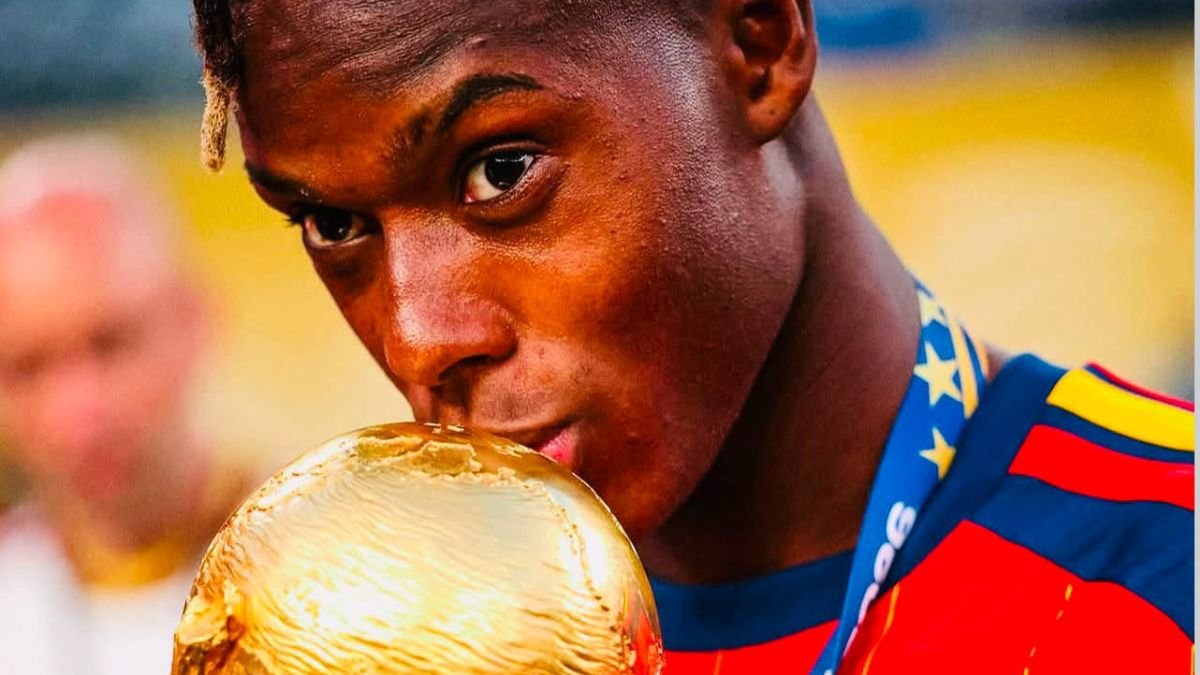
Nico Williams’ parents, Felix and Maria Comfort Arthur, are Ghanaian nationals whose migration to Spain shaped the careers of Nico and Inaki Williams.
Spanish footballer Nico Williams has quickly risen to prominence as one of Europe’s most exciting young talents.
While his skills on the pitch have captured global attention, the foundation of his success lies in the sacrifices and resilience of his parents, Felix Williams and Maria Comfort Arthur.
Both of their journey from West Africa to Spain is a remarkable story of endurance, hope, and determination.
Felix and Maria were born in Ghana, a country known for its rich football culture and strong family values. In the late 1990s, they made the courageous decision to leave their homeland in search of a better future for their children.
Their migration was not easy; it involved crossing the Sahara Desert and entering Spain through Melilla, a journey filled with danger and uncertainty.
This Ghanaian heritage remains central to the Williams family’s identity. It instilled values of resilience, humility, and respect, which Nico and his brother Inaki carry with them both on and off the pitch.
After arriving in Spain, Felix and Maria settled in Bilbao, where their first son, Inaki Williams, was born in 1994. Later, the family moved to Pamplona, where Nico was born in 2002.
Life was not easy for the family in their early years. Felix and Maria worked tirelessly in modest jobs to provide stability and opportunities for their children.
Despite financial challenges, they ensured that Nico and Inaki had access to education and the chance to pursue football. Their sacrifices created the environment in which both brothers could thrive.
Influence of Father Felix
Felix Williams, though not a public figure, played a vital role in shaping his sons’ discipline and work ethic.
His sacrifices, working long hours and enduring hardship, gave Nico and Inaki the chance to pursue football without the burden of financial insecurity.
His Ghanaian roots also gave the brothers a strong cultural identity, reminding them of the importance of humility and perseverance.
Influence of Mother Maria
María Comfort Arthuer has often been described as the emotional backbone of the family. Coaches and teammates highlight her role in instilling discipline and respect in her sons.
Former Athletic Club manager Gaizka Garitano once credited her influence, saying she was key to their improvement, not only in football but also in the way they are, the respect of everybody.
Her sacrifices were publicly acknowledged when Nico gave his FIFA World Cup medal to her, a symbolic gesture that went viral. It was a heartfelt tribute to the struggles she endured and the unwavering support she provided.
Despite choosing different national teams, both brothers credit their parents’ Ghanaian nationality and sacrifices for their success. Their decisions highlight the balance between heritage and upbringing.
The Williams family story is not just about migration; it is about values. Felix and Maria instilled in their children the importance of respect, humility, and hard work.
These values are evident in the way Nico and Inaki conduct themselves both on and off the pitch.
Their Ghanaian nationality remains a source of pride, even as their children represent different countries. It serves as a reminder of the sacrifices made and the cultural identity that continues to shape their lives.
Nico Williams’ parents are Ghanaian nationals whose migration story from Ghana to Spain shaped the lives and careers of both Nico and Inaki Williams.
Their resilience and sacrifices remain central to the brothers’ success on and off the pitch. Nico’s choice to represent Spain and Inaki’s decision to honor Ghana reflect the dual identity created by their parents’ journey.
The story of Felix and Maria is a powerful reminder that behind every football star lies a family whose sacrifices and values make success possible.
Their Ghanaian nationality is not just a detail; it is the foundation of the Williams brothers’ identity and achievements.